
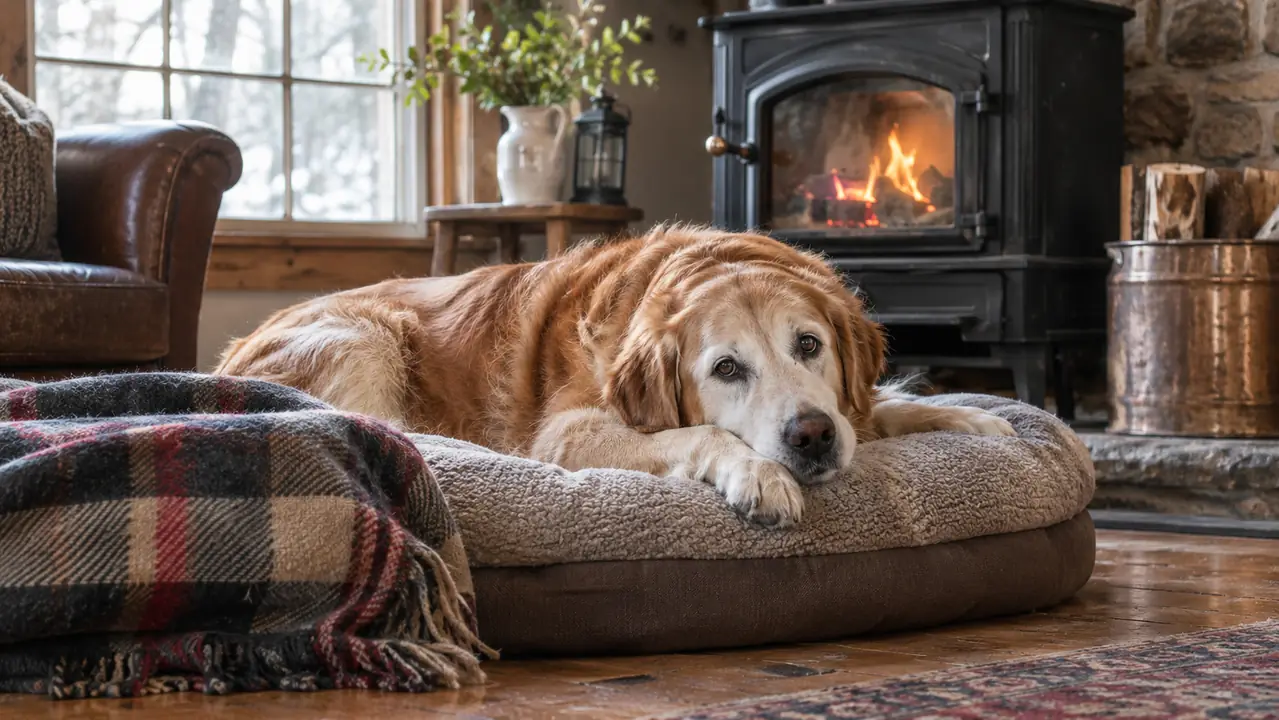
The first sign was the rocking. Duchess would get her front legs under her, rock back and forth twice, and then finally haul her back end up off the barn floor. She is a yellow Labrador, nine years old this spring, sixty-four pounds. Our vet diagnosed hip dysplasia with early arthritis in both hips when she was seven. His advice has not changed in two years. Keep her lean, keep her moving, and watch how she gets up.
Getting up was the problem. The pole barn floor is poured concrete and it stays cold well into June. The wood floor in the living room is not much warmer in January. I folded an old moving blanket double in the corner of the barn where she likes to lie while I work. It flattened out inside a week and she was back on the concrete. I tried a second blanket on top of the first. Same result.
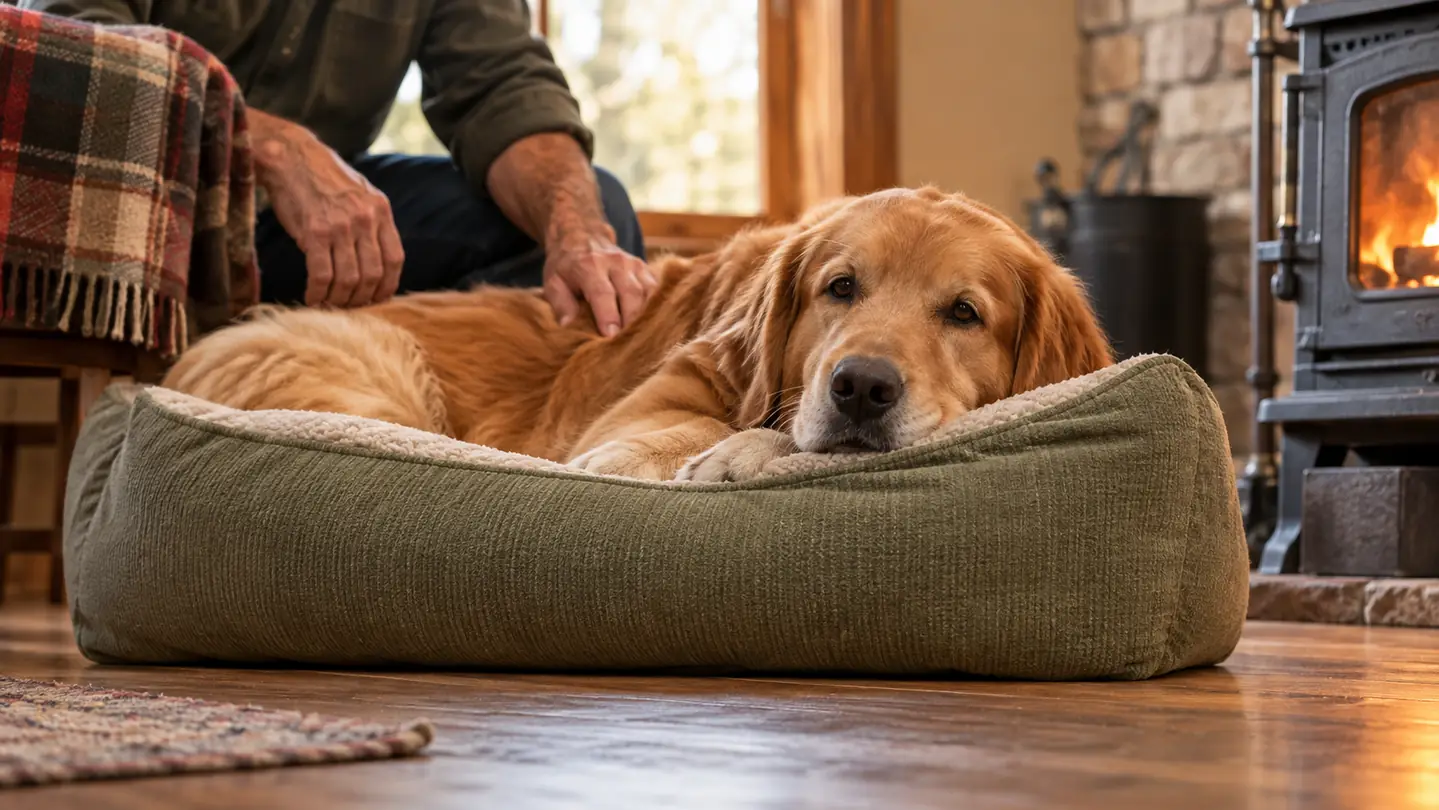
About fourteen months ago I bought an EHEYCIGA orthopedic bed, the extra large, forty-four inches long by thirty-two inches wide with six and a half inches of foam. I paid for it myself on Amazon. Nobody sent me one to try and nobody asked me to write this.
For the first three days she would not get on it. I had put it in the living room next to the woodstove, which is where the warm floor already was, so I cannot say I blamed her. On the fourth morning she was on it with her chin on the raised side. She has slept there every night since.
It did not fix her hips. What it fixed was the getting up, and the getting up is the part I watched every single morning.
Four days to choose foam over a cold floor
Forty-four by thirty-two inches, six and a half inches of memory foam over egg crate foam, a waterproof liner under a washable cover. It is the same EHEYCIGA bed Duchess has slept on for fourteen months.
Amazon Check Today's Price on Amazon →The foam is the part that matters for a dog with sore hips. Memory foam on top of egg crate foam, six and a half inches of it, so a sixty-four pound dog sinks in a little instead of bottoming out on the floorboards. I am not a vet and I am not going to tell you a bed treats dysplasia. What I will tell you is that a dog with sore hips will take a soft surface over a hard one every time, provided the soft surface is actually soft.
The three-sided bolsters were not something I cared about until I watched her use them. She rests her head on the low end and pushes her back into the raised side to stand up. That push is easier on her than pushing off the floor. The cover unzips and goes in the machine. I wash it about once a month and more in mud season, and the waterproof film between the fleece and the bottom fabric keeps the foam from soaking through when she comes in wet. The bottom is non skid, which counts for something on a wood floor in a house where she pushes off with her front legs to get up.
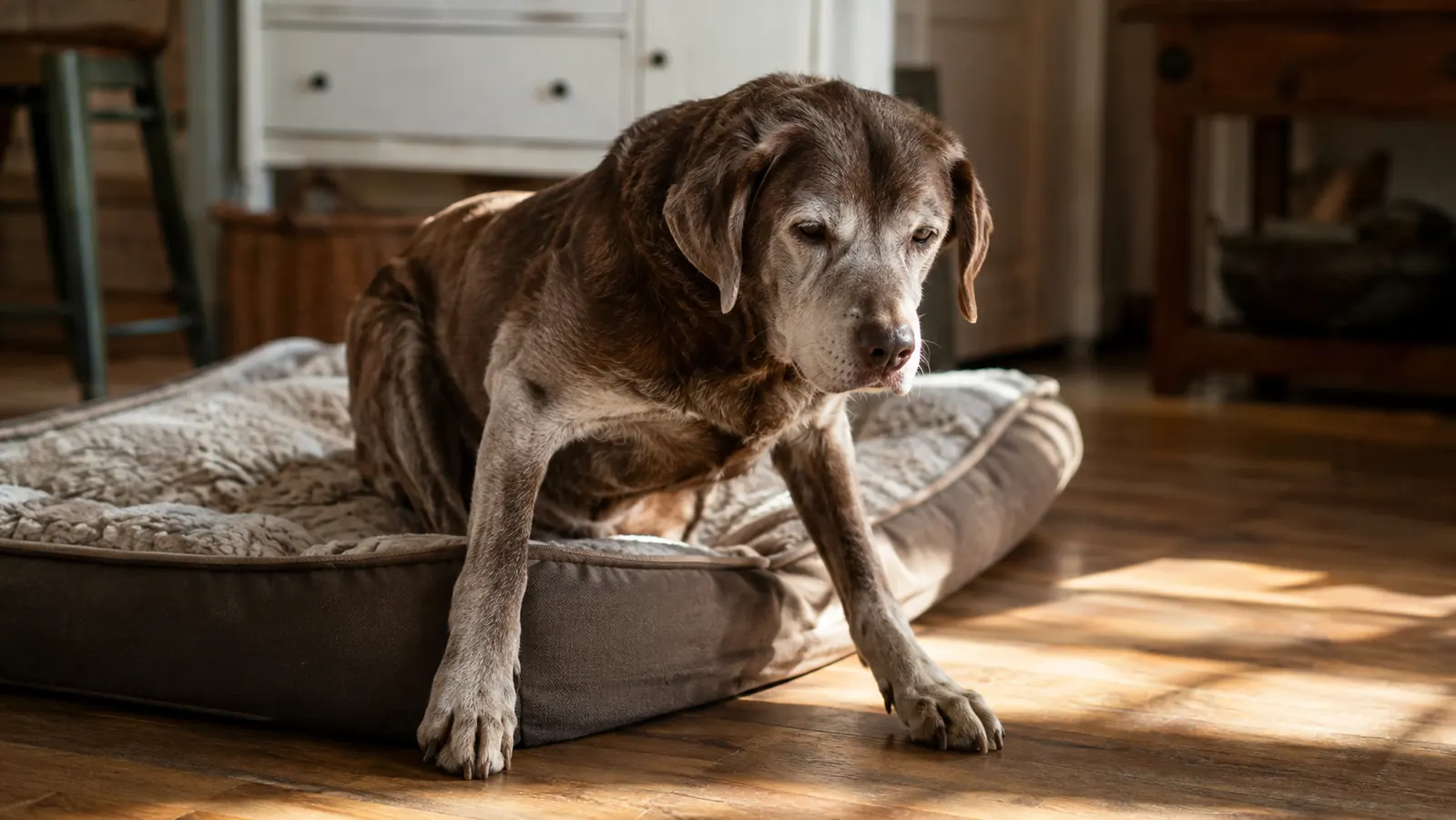
I am not going to sit here and claim the bed did what the chews could not. She has been on a joint chew from our vet's suggestion for two years now, and salmon oil for about one. The first change I noticed from the chew came at roughly six weeks, when she quit rocking quite so much on the way up off the floor. The oil mostly showed up in her coat. I cannot separate any of it, honestly. What I can separate is where she chooses to lie down.
What the EHEYCIGA bed did not do is fix everything. She still takes the three back porch steps one at a time, and on icy mornings I clip the rear support sling under her hind end and walk beside her. She still will not jump into the truck. The folding ramp handles that. The bed handles the ten hours a night she spends lying down, which is most of her day, and that is the piece I could actually control.
Two things I would pass along to anyone buying one. First, it comes compressed, and the instructions say to let it expand for twenty-four to forty-eight hours before you judge it. Out of the box it looks flat and you will think you got the wrong thing. Second, in the pole barn she still lies on an old folded moving blanket while I work, and that is on me. If I were buying again I would get a second EHEYCIGA bed and put it out there too.
What I'd Tell You If We Were Sitting at My Kitchen Table
I would tell you to get the diagnosis first. A bed is not going to tell you whether your dog has dysplasia or a soft tissue injury or something our vet needs to look at, and I would not guess at that with my own dog. Duchess was diagnosed at seven, and the plan came from our vet, not from a listing. Once you know what you are dealing with, reduce the load. That means a soft place to lie down, a ramp instead of a jump, a sling on the bad mornings, and a dog kept lean.
And I would tell you that of the five things I have bought for her hips, the bed is the one she uses most. She is on it ten hours a day. The sling and the ramp get used for a few minutes at a time, and the chews and the oil are a morning routine. The bed is the only one working while nobody is watching.
Ten hours a night on foam beats ten hours a night on concrete
The cover washes, the liner is waterproof, and fourteen months of a sixty-four pound dog getting up and down has not flattened the foam. If your dog is slow to rise, start with the floor.
Amazon Check Today's Price on Amazon →