
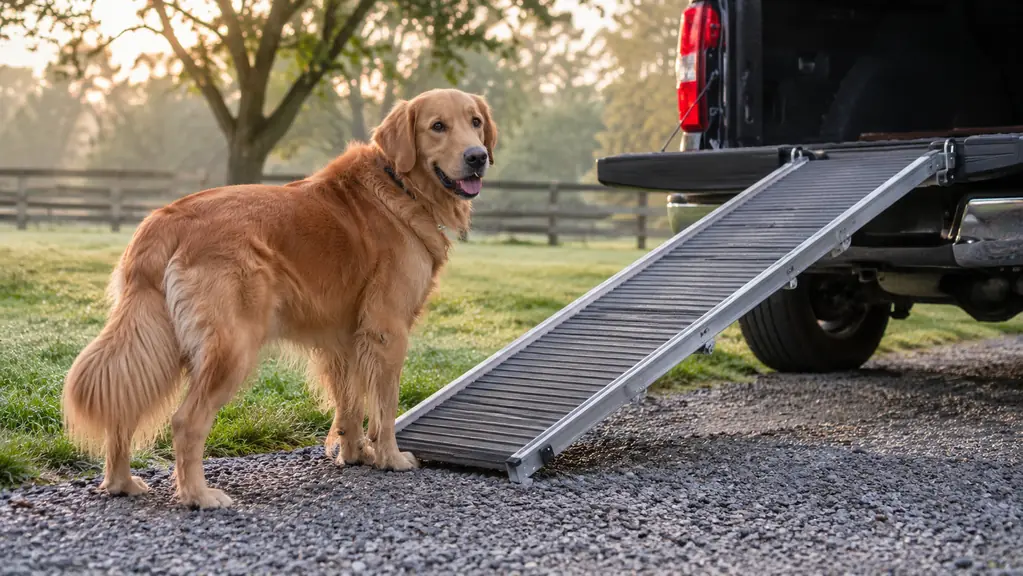
Duchess is a nine-year-old yellow Labrador, about 64 pounds, and she has been carrying a hip dysplasia diagnosis and a bit of arthritis in both hips since she was seven. Lifting her onto the back seat of my crew cab started out as a kindness and turned into a chore I dreaded. Sixty-four pounds is not a heavy dog. Sixty-four pounds lifted twice a day, every day, is a different animal entirely.
In March I bought a Pawaboo 74 inch folding ramp, mostly because my back had opinions and partly because I could see her bracing before I even reached for her. Eight months later it lives in the truck bed, and here is what changed, in the order it mattered.
The ramp that ended the twice a day lift
74.8 inches long, 19.69 inches wide, rated to 250 pounds. It hooks on the back door sill of a crew cab and folds flat when you are done.
Amazon Check Today's Price on Amazon →It takes the load off her hips, not just off my back
I was lifting her badly, one arm under the chest and one under the hindquarters, twisting as I set her on the seat. She would stiffen and I would feel it in my lower back for an hour. The ramp changes the job from lifting to guiding. She does the work with her own legs, at her own pace, and I stand there with a hand near her collar. That is a smaller job for me and a better one for her.
The 74 inch length is the reason it works at all
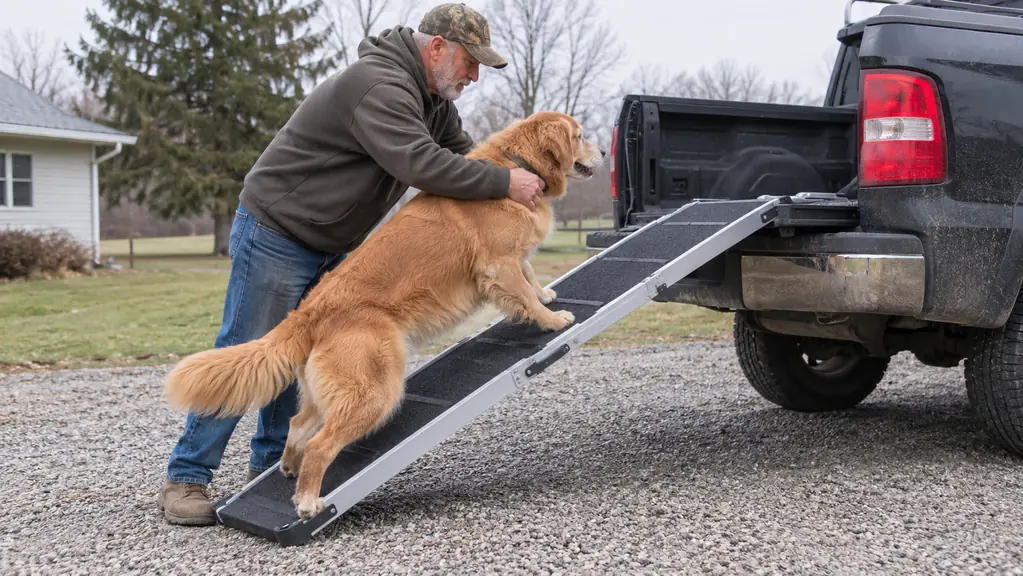
The first ramp I looked at was short enough to fit in a hallway and steep enough to be a staircase with a bad attitude. Duchess would have looked at it and walked back to the porch. This one measures 74.8 inches long, which spreads the climb over a much gentler run. From the ground to the back seat of a crew cab, that difference in pitch is the whole thing. A steep ramp asks a sore dog to power up. A long one asks her to walk.
Twenty inches of width means she is not aiming
The walking surface is 19.69 inches wide. What that means in the driveway is that Duchess climbs without me steering her feet. She has room to drift a little the way an old dog does, and she still has surface under all four paws. Narrow ramps make her bunch up and hesitate, and a hesitating dog at height is a dog who quits halfway up. Width is not a luxury. It is what keeps the trip boring.
The textured surface gives her paws something to push against
Bare wood gets slick when it is damp and smooth plastic gets slick when it is cold. The Pawaboo has a textured, non-slip surface, and it is the part I noticed first on a wet morning in April. Her nails catch instead of skating. If your dog has ever scrambled on a bare ramp, you know the sound. That scramble is the moment they decide they are finished with ramps. Grip early is what keeps them willing later.
It sits on the door sill and stays put while she loads
The ramp hooks over the back door sill of the crew cab and holds while she walks up. No wobble at the top, no gap where a foot could slip through. That stability matters more than anything else for a dog with bad hips, because a dog that feels the ramp shift will bail out sideways. I check it every time out of habit, the same way I check a trailer hitch. Eight months in, it has not moved on me once.
The ramp did not fix her hips. It stopped me from adding to the problem twice a day.
Folded, it rides under the tonneau cover and I forget it is there
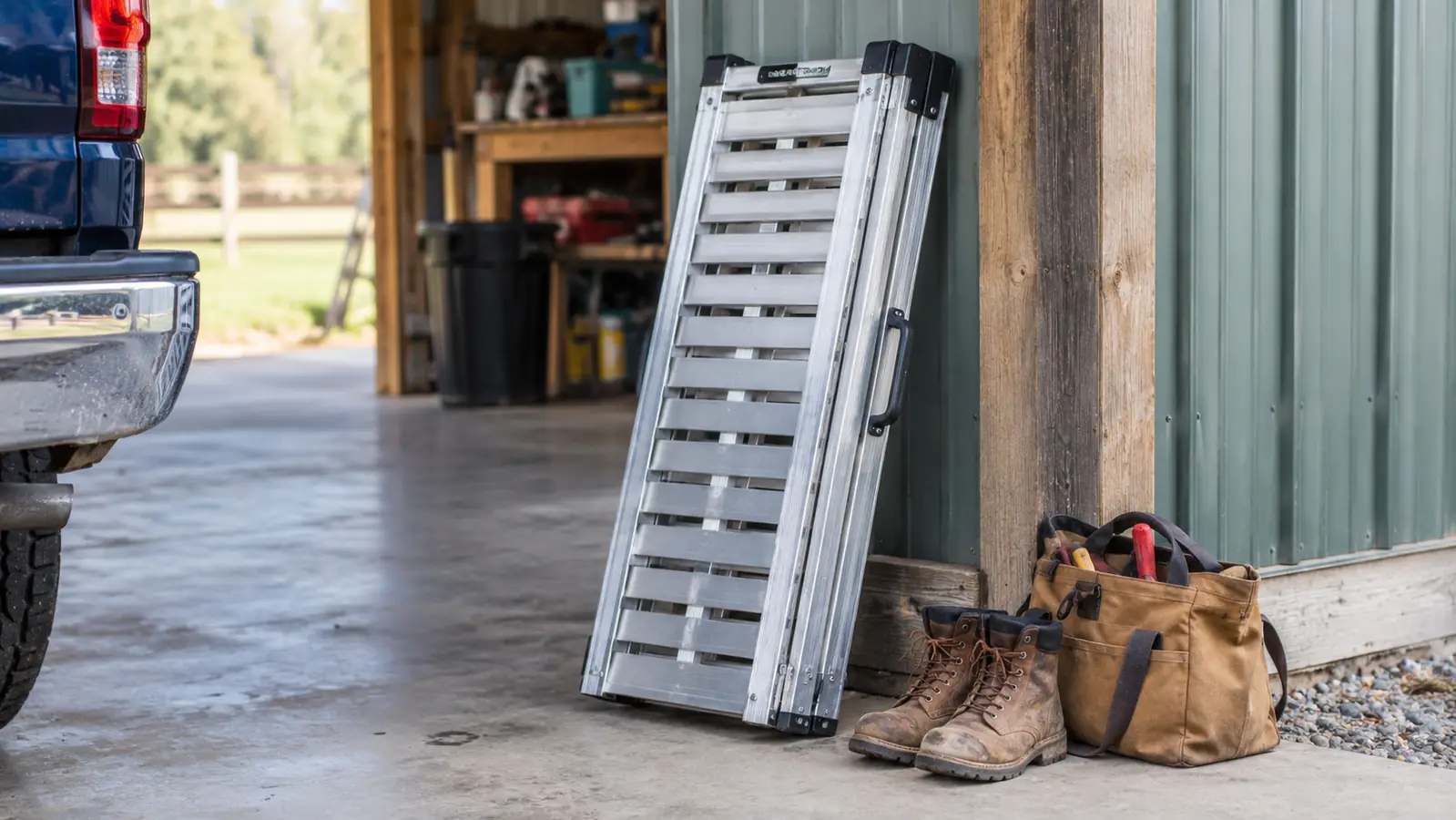
It folds flat, 0.83 inches by the spec sheet, and it lives in the truck bed under the tonneau cover. That is the practical part nobody mentions. A ramp that stays home is a ramp that does nothing. Because this one lives in the truck, it is there at the vet, at the feed store, at the hardware store, and on the gravel shoulder where Duchess decided she was done walking. Nothing to remember, nothing to load.
A 250 pound rating is headroom, not a challenge
The ramp is rated to 250 pounds, which is roughly four Duchesses. I am not going to pretend I tested that. What the rating buys you is margin. A ramp that is barely rated for your dog flexes under load, and flex is what spooks them. The Pawaboo feels solid under her at 64 pounds, and it would still feel solid under a much bigger dog. If you keep a giant breed, that margin is the difference between a tool and a toy.
Two weeks of treats bought me eight months of not lifting
She did not take to it on the first try. I put a handful of kibble along the surface, let her walk up three feet and come back down, and quit while she was still interested. Short sessions, twice a day, about two weeks. Then one morning she walked it on her own while I was still getting the door open. That is the entire training program. Patience and food. Rush it and you get a dog who refuses the ramp for a month.
A metal frame is something I can keep an eye on
The frame is metal, and that suits me. I fix equipment for a living and I would rather own something I can inspect than something I have to trust blindly. Every few weeks I look the ramp over, knock the gravel off it, and fold it back into the truck. That is the entire maintenance routine. Nothing on it has loosened in eight months and I have not had to touch it with a wrench.
One ramp replaces the whole morning negotiation
Before the ramp, every trip started with a decision. Is she stiff enough that I should lift her, or well enough to try the sill on her own? Then the lifting, then the guilt about the lifting. Now I set the ramp and she walks. The sling still hangs by the back door for the three porch steps on a rough morning, and some days she needs it. But the truck is handled. That is one less thing to weigh at six in the morning in February.
What I'd Skip
Folding pet stairs for the truck. I looked at a set before I bought the ramp, and the ones that fit behind a back seat are steep and narrow, which is the opposite of what a sore dog needs. Duchess would have needed two of the four steps and a running start. The other thing I would skip is the heroic one arm lift. I did it for months and told myself it was fine because she is only 64 pounds. It was not fine for either of us.
What I will not tell you is that a ramp is a cure. It is not. Duchess still has hip dysplasia, she still gets up slow off the concrete in the pole barn, and she still sees our vet for the diagnosis and the dosing that actually manages it. The Pawaboo ramp solves exactly one problem, which is the part where a 64 pound dog had to be hoisted into a truck twice a day. That is a smaller problem than her hips and a bigger one than most people admit. If your dog is limping, dragging a foot, or yelping when you touch her, that is a vet call, not a shopping decision. Get the diagnosis first, then figure out the ramp.
Eight months in, it is still in the truck bed
74.8 inches long, 19.69 inches wide, 0.83 inches folded, metal frame, 250 pound rating. The version I bought and still use every week.
Amazon Check Today's Price on Amazon →