
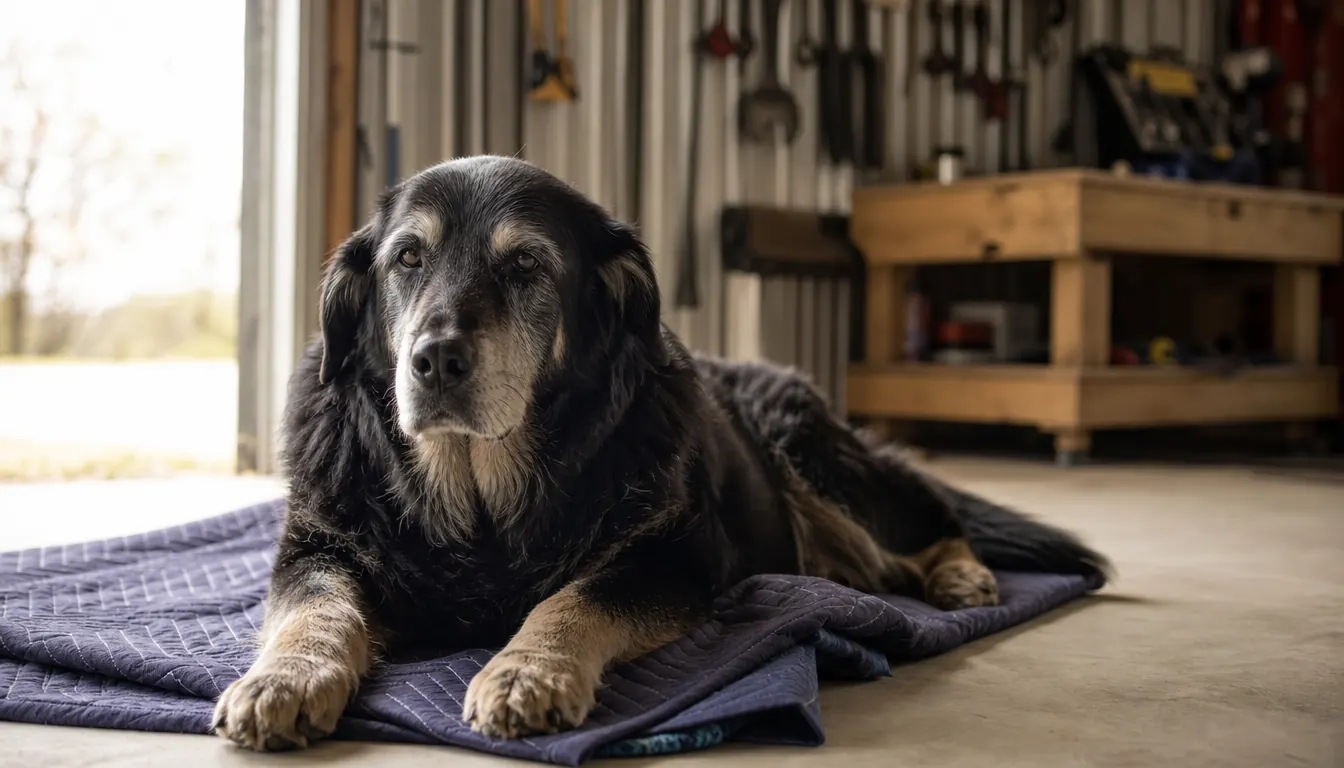
Duchess is nine now, a yellow Lab that runs about 64 pounds, and she was diagnosed with hip dysplasia and early arthritis in both hips at seven. The thing I noticed first was not a limp. It was the pause. She would lie down on the concrete in the pole barn, think about it, and then rock herself forward to get her back feet under her. Our vet put her on a joint supplement and told me the usual list: keep her lean, keep her moving, and get omega-3s into her bowl. That last one is where Natural Dog Company Wild Alaskan Salmon Oil came in, about a year ago.
I am not a vet and I am not going to pretend the pump bottle is a fix for a bad hip. What I can tell you is what a year of using it looks like on one farm dog, and why I keep buying it. Nothing here replaces a diagnosis or a dosing conversation with your own vet, and if your dog is suddenly refusing to rise or yelping when you touch a leg, that is a vet call, not a supplement decision. With that said, here are the ten reasons it earned its spot in the fridge door.
The one thing I add to her evening kibble with a single pump
Wild Alaskan Salmon Oil, 32 ounces, with EPA and DHA omega-3s, pumped straight onto food. It is the least complicated part of Duchess's routine.
Amazon Check Today's Price on Amazon →It puts omega-3s where the joint story actually starts
Most of what I read about joint supplements is about cartilage. Our vet talks about inflammation, and that is the lane fish oil runs in. The label on this bottle lists EPA and DHA, the two omega-3 fats, and lists joint support and mobility support among the benefits. It is not a painkiller. Duchess still takes her chewable tablet every morning and still uses the sling on bad mornings. What the oil does is give her body the fat it needs for its own repair work, and that is a fair description of what I expect from it.
The dose is one pump, not a handful of pills
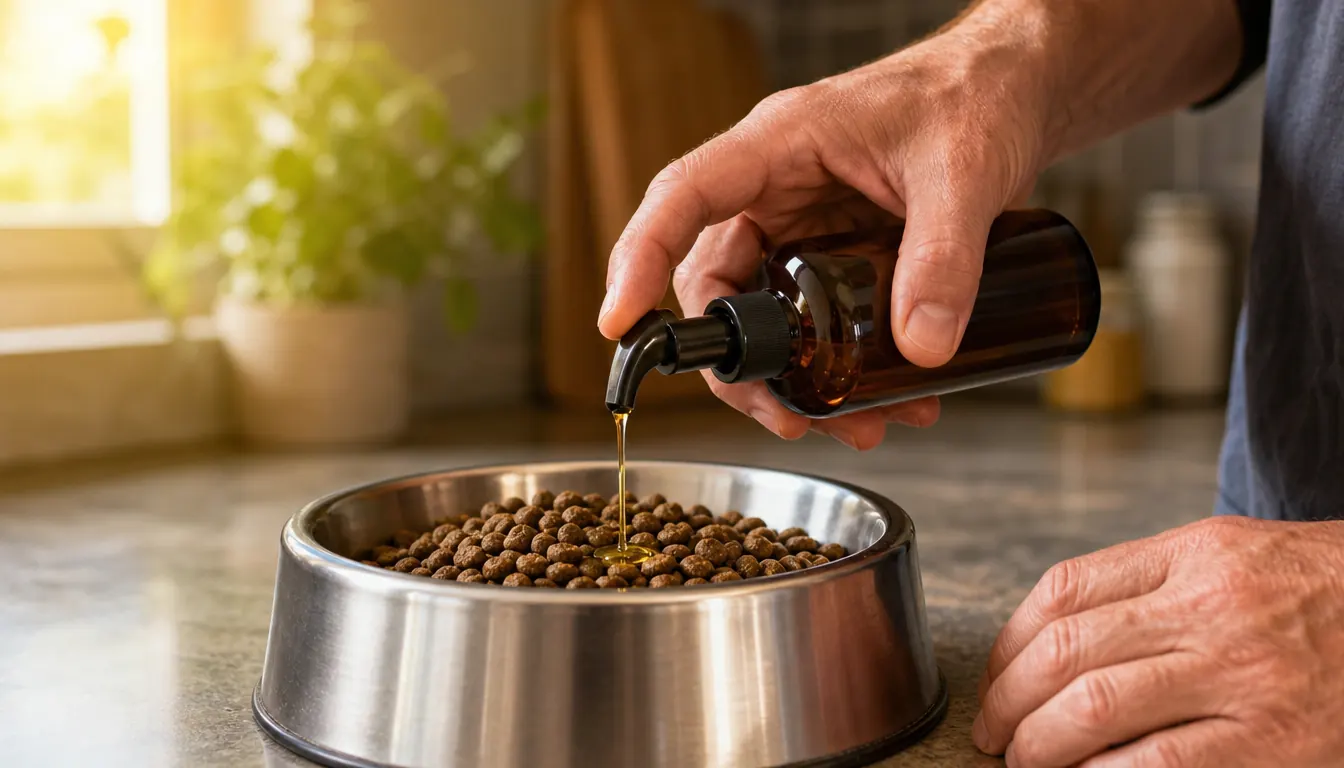
I have a 64-pound dog who will take a tablet like a treat, so pills are not the problem here. The problem is time. A pump bottle is one motion. I pump it over her evening kibble, cap it, put it back in the fridge door. That is perhaps eight seconds. When you are already doing a morning tablet, a ramp, a bed rotation and a weight check, a supplement that takes eight seconds is a supplement that actually gets used.
It goes on the food she already eats
This is a food topper, not a separate ritual. The Natural Dog Company listing says it pumps directly onto meals, and that matches how I use it. No mixing a powder into water, no hiding a capsule in peanut butter, no second bowl. If your dog is on a senior formula or a prescription diet, you are adding oil to the same bowl, which is about as low-friction as it gets.
Same time as her evening meal, so I do not forget
I am 61 and I run a farm. If a supplement is not attached to something I already do, it does not happen. Duchess gets her chewable tablet in the morning by the coffee maker. The oil goes on her supper. Two anchors, one in the morning and one at night, and neither one requires me to remember a separate schedule. The bottle lives in the fridge door once it is open, which also means I see it every time I get the milk out.
Vitamin E is on the label as the active ingredient
I read the back of the bottle before I bought it. The active ingredient listed is vitamin E, alongside the salmon oil itself. That matters to me because fat goes rancid, and vitamin E is the thing that keeps a bottle of oil from turning on you between pumps. I am not a chemist. I just know that a 32-ounce bottle lasts long enough that I want it stabilized, and I want it in the fridge once it is open.
Her coat changed in about a month, and that was the first sign
I will be straight with you. I cannot separate the oil's effect on her joints from the chewable tablet she was already taking. What I can separate is her coat. About a month in, the dull patch over her hips filled in and her coat picked up a shine that had been missing. That is a coat result, not a hip result, and I am not going to pretend otherwise. It was still the first visible thing that changed, and it told me the oil was getting into her.
Skin and coat support is not a cosmetic on an old dog
An old dog lies down more, and every point that touches the floor takes more wear. The listing puts skin support and coat support right at the front of the benefits, and I have come to think that is the right order. A dog with a sore, flaky coat is a dog that is uncomfortable in one more way. Duchess is on a folded blanket in the barn and a foam bed in the living room, and a better coat makes both of those surfaces kinder to her.
The label also lists heart and immune support, and she is nine
Joint health is the reason I started, but Duchess is nine, and nine-year-old Labs are not a one-system problem. The product benefits listed on the bottle include heart support and immune support alongside joint and mobility support. I am not claiming it prevents anything. I am saying that when I am already spending eight seconds on a bowl, I would rather the thing I am adding covers more than one system.
It stacks with the ramp, the bed and the sling instead of replacing them
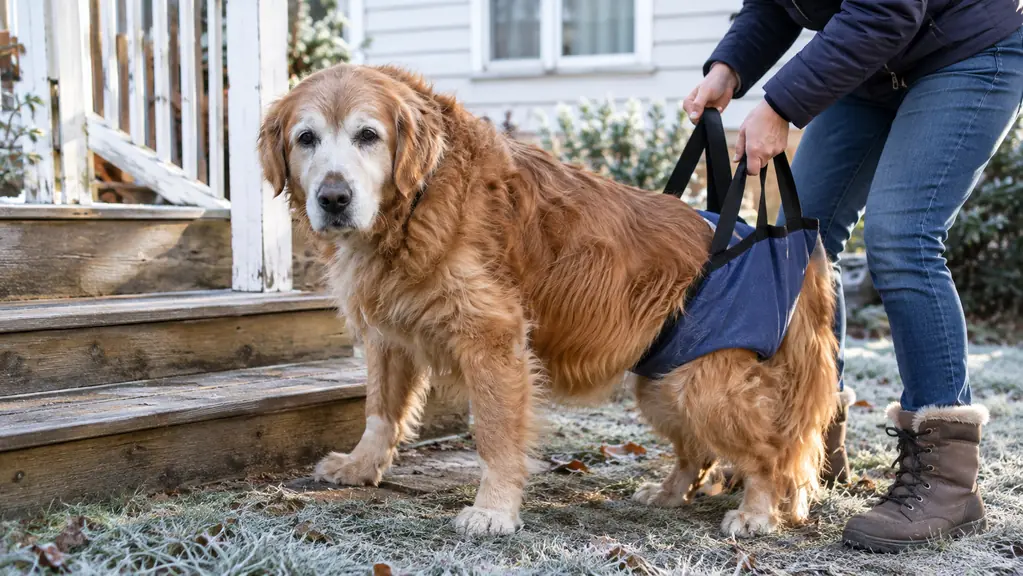
The oil is one lever, not the whole machine. About fourteen months ago I bought her a foam bed for the living room. About ten months ago I bought a rear support sling for the porch steps on icy mornings. About eight months ago I bought a folding ramp so I could stop lifting her into the truck. The oil came before all three and it is still in the rotation. None of these fixes the hip. Together they make her day easier, and the bowl is the simplest of the lot.
It is easy to run a fair trial on one dog
Here is the part I like most. You can run this as a real trial. Pick a start date, take a phone video of your dog getting up off the floor, and give it a month or two at the amount the label calls for at your dog's weight. Then take the same video. If the coat improves and the getting-up does not, you know what you bought. If nothing changes, you stop. One bottle of Natural Dog Company Wild Alaskan Salmon Oil, one pump, one decision.
What I'd Skip
Two things I would skip. First, I would skip buying oil instead of getting a diagnosis. If your dog is lame, guards the leg, or cannot rise, that is a vet appointment, and no topper takes the place of an X-ray and a straight answer about what is actually wrong. Second, I would skip the flavored gimmicks and the tiny bottles. Read the back for EPA and DHA, check the volume, and buy a size that matches your dog. A 64-pound dog and a 12-pound dog do not need the same bottle, and the label on this one gives you the amount to feed by weight.
About a month in, the dull patch over her hips filled in and her coat picked up a shine that had been missing.
If your big dog has started pausing before she gets up, start with the bowl
Natural Dog Company Wild Alaskan Salmon Oil is a 32-ounce pump bottle with EPA and DHA omega-3s and vitamin E. It goes on the food, once a day, and it is easy to stop if you do not see a change. Get your vet's read on the diagnosis and the amount first.
Amazon Check Today's Price on Amazon →